
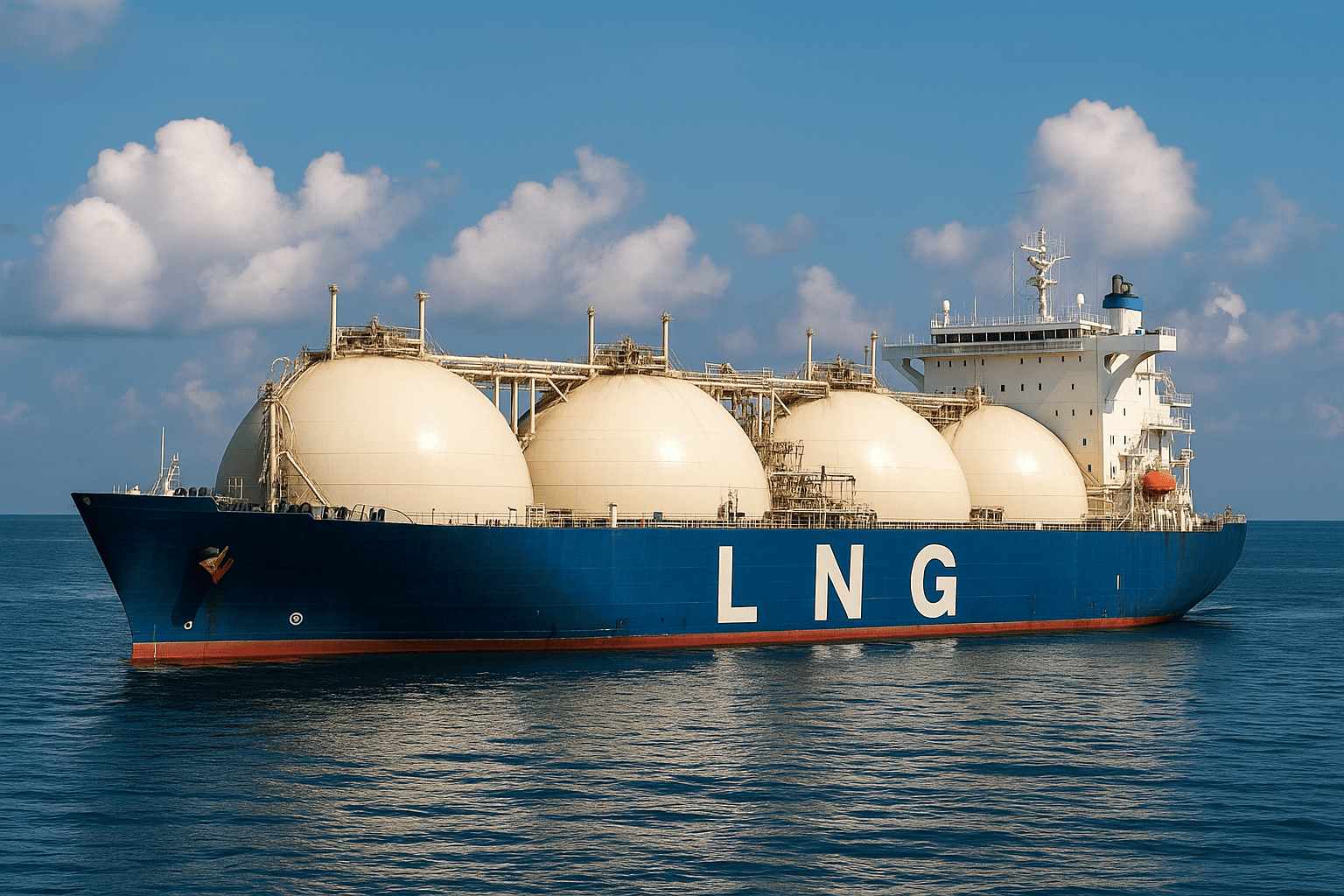
‘What is LNG’ has become a key component of the global energy landscape. So, if you’re wondering ‘What is LNG?’, read on for a clear, useful and well-structured explanation of how it is produced, how it is used and the vital role it will play in the years to come. Get ready to satisfy your curiosity – this article will help you understand its relevance without beating around the bush or using unnecessary technical jargon.
What is LNG gas?
The acronym, LNG, refers to Liquefied Natural Gas, also known as LNG liquefied natural gas. It is natural gas that, when cooled to approximately -162°C, turns into a liquid. The result is a volume that is 600 times smaller than the gas in its gaseous state, making it easier to transport and store.
Why turn it into a liquid?
- Reduced volume: allows efficient transport by sea or land.
- Mobility: enables access to places with no pipeline infrastructure.
- Flexible supply: can be stored and regasified on demand.
Production of liquefied natural gas (LNG)
The production of liquefied natural gas (LNG) takes place in three key stages:
1. Natural gas extraction
Natural gas (mainly methane) is obtained from underground deposits via land or offshore platforms.
2. Processing and liquefaction
The gas is purified – water, CO₂, sulphur compounds and ethane are removed – before being transferred to the liquefaction plants. There, it is cooled to a liquid state by means of a cryogenic cooling cycle. This process requires advanced engineering and highly efficient equipment.
3. Transport and regasification
The resulting LNG is loaded into pressurised LNG containers. Upon arrival at its destination, it is stored and then regasified to return it to its gaseous state for distribution through gas pipeline networks.
Uses for LNG – a versatile fuel
LNG is not just a convenient means of transporting energy, it has multiple uses in a wide range of sectors.
Industrial use and energy
- Electricity generation: thermoelectric power plants use it because of its high efficiency and low emissions.
- Industrial processes: chemical factories, agricultural fertilisers and oil refineries use it as a clean and controllable source of energy.
Transport use
It is a key alternative fuel for:
- Maritime transport: ships equipped with dual-fuel engines produce lower oxide and particulate emissions.
- HGVs: logistics fleets with LNG trucks minimise environmental impact.
- Urban transport: LNG-enabled buses and government vehicles offer sustainable solutions.
Residential and commercial use
In areas not connected to pipelines, LNG is used for heating, hot water and cooking.
Advantages and challenges: a balanced view
Understanding the current and future position of LNG requires examining its pros and cons.
Advantages
- Low emissions: cleaner than other fossil fuels: reduces CO₂ (~20-30 %) and almost completely eliminates SO₂, particulates and nitrogen oxides.
- Flexibility: ideal for balancing with renewable energies due to its fast start-up and shut-down times.
- Energy security: diversifies sources and reduces dependence on gas pipelines.
- Energy transition: bridging traditional and renewable fuels.
Challenges
- Costly infrastructure: liquefaction plants, regasification and LNG tanks require large investments.
- Methane emissions: whether from leakage or transport, methane (LNG) is a potent GHG.
- Volatile price: global markets can cause the price to quickly rise and fall.
- Gas dependence: some critics warn that its expansion may reduce incentives to accelerate renewables.
LNG’s role in the future of energy
The evolution of liquefied natural gas (LNG) is marked by innovation and strategic roles:
1. Integration with renewables
LNG will provide flexible support for grids with a high share of renewables (solar, wind), acting as a quick backup in the event of green production outages.
2. Low-emission LNG
Work is underway on versions using biomethane (biogas) and carbon capture and storage (CCS) projects, further reducing its ecological footprint.
3. Global infrastructure expansion
In Europe, Asia-Pacific and Latin America in particular, more LNG plants will be built to ensure alternative supplies.
4. Maritime sector and heavy goods transport
LNG continues to gain ground as a cleaner option for lorries, ships and logistics fleets. Its uptake is growing with stricter emissions standards.
LNG and sustainability: a necessary balance
- Vital as a bridge fuel: to rapidly reduce emissions while developing renewables.
- Maximum focus on leakage: essential methane detection and control technologies.
- Development of hydrogen and e-fuels: LNG infrastructure can be converted into compressed renewable hydrogen storage facilities, opening up a path to a cleaner future.
Why should this issue matter to you?
- Understanding what LNG is allows you to appreciate its real role in the fight against climate change.
- Understanding how it is produced and used provides perspective on the challenges facing the global energy system.
- It puts you at the forefront of current debates on green transition, energy security and the low-carbon economy.
Summary: everything you need to remember
- What is LNG gas?: liquefied natural gas, which enables easy transport and storage.
- Production: extraction, purification, liquefaction, transport and regasification.
- Uses: power plants, ships, HGVs, domestic use.
- Advantages: lower emissions, flexibility, energy security.
- Challenges: expensive infrastructure, methane leakage, price volatility.
- Future: green transition axis, biomethane, carbon capture, conversion to hydrogen.
Liquefied natural gas (LNG) is much more than just a way to transport gas: it is a strategic solution that, when properly managed, can accelerate the energy transition, reduce emissions and ensure a more flexible and resilient supply. Understanding what LNG is, how it is produced and how it is used not only strengthens your energy knowledge, but also plugs you into the big debates about a sustainable future.